
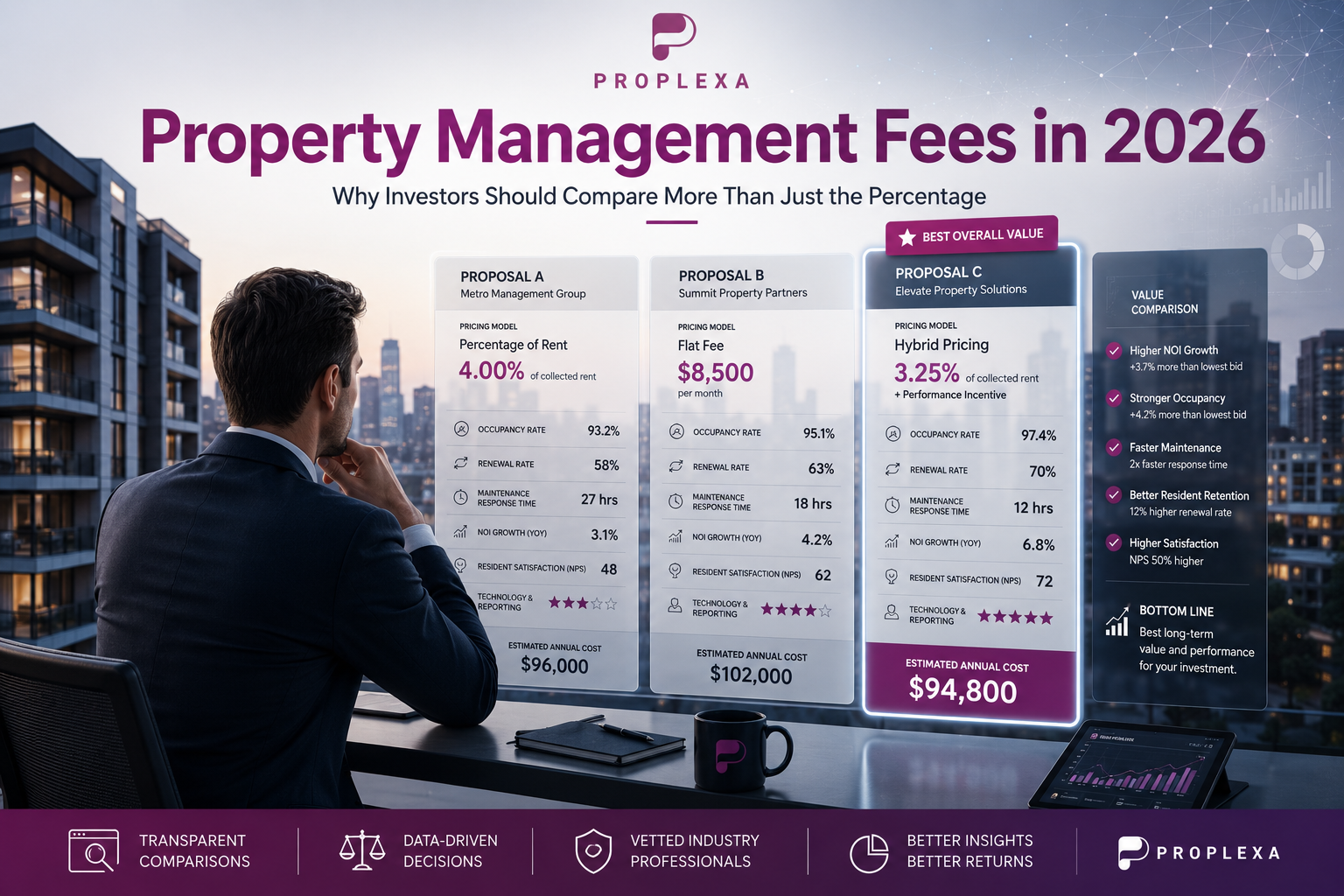
One of the first questions every property owner asks is:
"How much does property management cost?"
It's a reasonable question.
After all, management fees directly affect operating expenses.
But focusing only on the percentage can lead investors to make one of the most expensive mistakes in real estate.
Because while management fees are easy to compare, operational performance is what ultimately determines portfolio value.
In 2026, experienced investors are increasingly evaluating property managers based on outcomes—not just pricing.
Understanding the Most Common Fee Structures
Although pricing varies by market, property type, portfolio size, and service scope, most management agreements fall into several common structures.
Percentage of Collected Rent
This remains the most common model for residential property management.
Management companies typically charge a percentage of monthly rent collected rather than scheduled rent.
The exact percentage depends on factors such as:
- Property type
- Number of units
- Market complexity
- Included services
- Portfolio scale
Flat Monthly Fee
Some firms charge a fixed monthly amount per property or per unit.
This model offers predictable budgeting but may not always align incentives with revenue growth.
Hybrid Pricing Models
Institutional and larger multifamily portfolios increasingly negotiate customized agreements that combine:
- Base management fees
- Performance incentives
- Leasing commissions
- Project management fees
- Technology fees
These structures are often designed to align the manager's success with the owner's financial objectives.
The Hidden Costs Owners Often Miss
Comparing management fees without considering operational outcomes provides only part of the picture.
Owners should also evaluate:
Vacancy Costs
Every vacant unit represents lost revenue.
A manager who reduces average vacancy by only a few days per lease cycle may generate significantly more value than a lower-cost competitor.
Resident Turnover
Turnover generates costs that extend far beyond lost rent.
These include:
- Unit preparation
- Marketing
- Leasing commissions
- Administrative labor
- Maintenance
- Utilities during vacancy
Higher resident retention frequently offsets higher management fees.
Maintenance Efficiency
Deferred maintenance often becomes expensive maintenance.
Managers with stronger vendor networks and preventative maintenance programs may reduce long-term capital expenditures while improving resident satisfaction.
Rent Collection Performance
Small differences in collection rates accumulate over time.
Effective delinquency management protects cash flow while reducing administrative burden.
Why Institutional Investors Rarely Choose the Lowest Bid
Institutional owners typically evaluate management companies using weighted scoring models.
Rather than focusing exclusively on price, they assess:
- Experience with similar asset classes
- Portfolio size
- Technology capabilities
- Financial reporting
- Staffing model
- Local market expertise
- Resident satisfaction
- Operational KPIs
- Compliance processes
- References
- Fee structure
Price matters—but rarely determines the final decision by itself.
Questions Every Owner Should Ask Before Signing
Instead of asking only:
"What's your management fee?"
Consider asking:
- What services are included?
- Which services incur additional charges?
- How is performance measured?
- What occupancy rates do your portfolios typically maintain?
- What are your average renewal rates?
- How quickly do you respond to maintenance requests?
- What technology do owners receive access to?
- How often are financial reports delivered?
- What is your communication process?
- How do you benchmark your performance?
These questions often reveal far more than the fee schedule.
Technology Is Changing Pricing Transparency
One of the biggest shifts in 2026 is the growing demand for transparency.
Owners increasingly expect to compare:
- Fees
- Scope of services
- Technology platforms
- Reporting capabilities
- Response times
- Operational metrics
Side by side.
This trend mirrors procurement practices already common in enterprise software, construction, and professional services.
Property management is beginning to follow the same path.
Why Competitive Comparisons Create Better Decisions
Receiving multiple proposals allows owners to evaluate not only pricing but also overall value.
Side-by-side comparisons make it easier to identify differences in:
- Services included
- Operational approach
- Technology stack
- Experience
- Reporting
- Responsiveness
- Pricing models
This leads to more informed decisions and stronger long-term partnerships.
How Proplexa Makes the Process Easier
Selecting a property management company has traditionally been fragmented and time-consuming.
Proplexa simplifies the process by enabling property owners to receive multiple proposals, compare them transparently, and evaluate providers using consistent criteria.
Instead of relying on marketing claims or isolated referrals, owners can make decisions based on structured information and measurable differences.
Final Thoughts
The lowest management fee is not always the lowest-cost decision.
Small improvements in occupancy, retention, maintenance efficiency, and operational execution often create significantly more value than modest differences in pricing.
In 2026, successful investors are shifting their focus from asking:
"Who charges less?"
to asking:
"Who delivers the greatest long-term value?"
That distinction can have a meaningful impact on portfolio performance.